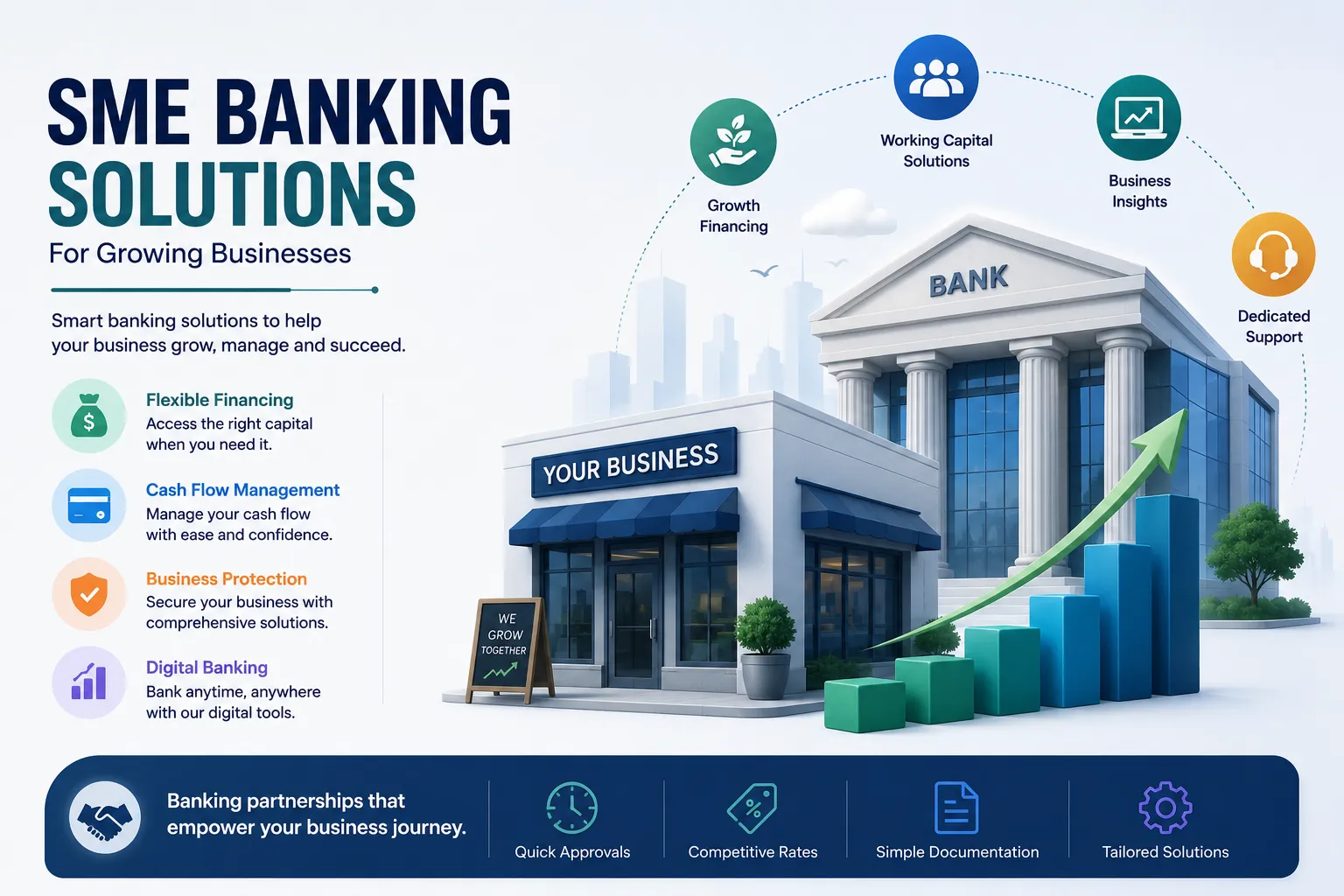
SME Banking Solutions for Growing Businesses
Small and medium-sized enterprises (SMEs) are the backbone of the global economy. Across North America, Europe, Asia-Pacific, and emerging markets, SMEs contribute significantly to employment, innovation, economic growth, and entrepreneurship. However, one of the most critical challenges faced by growing businesses is gaining access to effective banking solutions that support expansion, improve cash flow, reduce operational friction, and enable long-term financial stability.
Modern SME banking has evolved far beyond traditional business checking accounts. Today's business owners require integrated financial ecosystems that combine digital banking, payment processing, working capital financing, cash flow analytics, treasury management, trade finance, payroll services, business credit solutions, and automated financial reporting.
As fintech innovation continues transforming financial services, businesses now have access to more sophisticated banking tools than ever before. Whether managing daily transactions, funding expansion plans, optimizing working capital, or facilitating international trade, the right SME banking solutions can create a significant competitive advantage.
This comprehensive guide explores the most important SME banking solutions available today, their benefits, implementation strategies, and how growing businesses can leverage modern banking technologies to accelerate success.
Understanding SME Banking
SME banking refers to financial products and services specifically designed for small and medium-sized businesses. These solutions address the unique operational, financing, and cash flow requirements that differ significantly from both personal banking and large corporate banking.
Unlike consumer accounts, SME banking services focus on supporting business growth, managing financial complexity, and improving operational efficiency.
| Banking Segment | Primary Focus |
|---|---|
| Consumer Banking | Personal Financial Management |
| SME Banking | Business Operations & Growth |
| Corporate Banking | Large Enterprise Finance |
Why SME Banking Solutions Matter
Business growth often creates financial complexity. As companies expand, they face challenges such as managing larger transaction volumes, handling payroll obligations, financing inventory purchases, supporting international transactions, and maintaining healthy cash flow.
Modern SME banking solutions help businesses:
- Improve liquidity management
- Access growth capital
- Reduce administrative costs
- Automate financial operations
- Enhance payment processing capabilities
- Support international expansion
- Improve financial visibility
- Strengthen risk management practices
Business Banking Accounts
A dedicated business banking account forms the foundation of every successful SME financial strategy.
Modern business accounts provide significantly more functionality than traditional checking accounts.
Key features often include:
- Online banking access
- Mobile banking applications
- Multi-user account controls
- Integrated accounting tools
- Payment collection services
- Automated reconciliation capabilities
- Cash flow monitoring dashboards
| Account Feature | Business Benefit |
|---|---|
| Online Banking | 24/7 Account Access |
| Multi-User Controls | Enhanced Security |
| Accounting Integration | Operational Efficiency |
| Transaction Reporting | Financial Visibility |
| Mobile Banking | Convenience and Flexibility |
Cash Flow Management Solutions
Cash flow management remains one of the most important priorities for growing businesses.
Even profitable companies can experience financial stress if cash inflows and outflows are not managed effectively.
Advanced banking platforms now provide:
- Cash flow forecasting
- Real-time liquidity tracking
- Automated receivables management
- Accounts payable optimization
- Financial planning tools
Businesses that maintain strong cash flow visibility are generally better positioned to manage growth opportunities and economic uncertainty.
Business Financing Solutions
Access to capital is often essential for business expansion.
SME banking providers offer multiple financing options designed to support different growth objectives.
Business Term Loans
Term loans provide capital for equipment purchases, facility expansion, technology investments, acquisitions, and strategic initiatives.
Business Lines of Credit
Lines of credit offer flexible access to working capital for short-term financial needs.
Equipment Financing
Businesses can acquire machinery, vehicles, manufacturing equipment, and technology infrastructure through specialized financing programs.
Commercial Real Estate Loans
Property acquisition and facility expansion often require long-term financing solutions.
| Financing Product | Best Use Case |
|---|---|
| Term Loan | Major Business Investments |
| Line of Credit | Working Capital Management |
| Equipment Financing | Asset Acquisition |
| Commercial Mortgage | Property Purchases |
| Invoice Financing | Receivables Management |
Merchant Services and Payment Processing
Modern businesses require fast, reliable, and secure payment acceptance capabilities.
SME banking providers increasingly offer integrated merchant services that support:
- Credit card payments
- Debit card transactions
- Contactless payments
- Digital wallets
- Ecommerce transactions
- Recurring billing
- Mobile payment acceptance
Integrated payment processing can improve customer experiences while reducing administrative complexity.
Digital Banking Platforms
Digital transformation has significantly changed how businesses interact with financial institutions.
Modern digital banking platforms enable:
- Remote account management
- Real-time transaction monitoring
- Electronic payments
- Automated approvals
- Document management
- Financial reporting
- Mobile banking access
Digital banking solutions improve efficiency while reducing reliance on physical branch locations.
Treasury Management Services
As businesses grow, managing liquidity becomes increasingly important.
Treasury management solutions help organizations optimize financial resources and improve cash utilization.
Key treasury services include:
- Liquidity management
- Cash concentration
- Payment automation
- Fraud prevention tools
- Investment management solutions
- Foreign exchange services
Payroll and Employee Payment Solutions
Efficient payroll processing is essential for workforce management.
Many SME banking platforms now integrate payroll capabilities that simplify:
- Employee salary payments
- Tax calculations
- Benefits administration
- Compliance reporting
- Contractor payments
Automation helps reduce payroll errors and administrative burdens.
Business Credit Cards
Business credit cards provide operational flexibility and support cash flow management.
Advantages include:
- Expense tracking
- Working capital flexibility
- Travel benefits
- Cashback rewards
- Purchase protection
- Employee spending controls
Properly managed business credit programs can enhance operational efficiency while supporting short-term financing needs.
Trade Finance Solutions
Businesses engaged in international commerce often require specialized financial services.
Trade finance solutions help manage global transactions through:
- Letters of credit
- Import financing
- Export financing
- Supply chain financing
- Foreign exchange management
- Cross-border payment solutions
These services reduce international trade risks while supporting global growth strategies.
| Trade Finance Tool | Primary Purpose |
|---|---|
| Letter of Credit | Payment Assurance |
| Export Financing | Working Capital Support |
| Import Financing | Inventory Procurement |
| FX Management | Currency Risk Reduction |
Invoice Financing and Receivables Management
Many growing businesses experience delayed customer payments.
Invoice financing solutions allow companies to unlock capital tied up in outstanding receivables.
Benefits include:
- Improved liquidity
- Reduced cash flow pressure
- Faster access to funds
- Greater operational flexibility
This financing method is particularly useful for businesses with long customer payment cycles.
Cybersecurity and Fraud Prevention
As banking becomes increasingly digital, cybersecurity remains a top priority.
SMEs are often targeted by cybercriminals due to limited internal security resources.
Modern banking platforms provide:
- Multi-factor authentication
- Transaction monitoring
- Fraud detection systems
- Secure payment approvals
- Role-based access controls
- Data encryption technologies
Strong security measures help protect business assets and maintain customer trust.
Accounting and ERP Integration
Integration between banking platforms and accounting software improves operational efficiency.
Businesses can automate:
- Transaction reconciliation
- Expense categorization
- Financial reporting
- Accounts payable workflows
- Accounts receivable tracking
Automation reduces manual effort while improving financial accuracy.
AI and Analytics in SME Banking
Artificial intelligence is becoming increasingly important within business banking.
AI-powered tools can provide:
- Cash flow forecasting
- Fraud detection
- Credit risk assessment
- Financial insights
- Automated customer support
- Predictive analytics
These technologies help businesses make more informed financial decisions.
Embedded Finance and Banking-as-a-Service
Embedded finance is creating new opportunities for SMEs.
Businesses can now access financial services directly within operational software platforms.
Examples include:
- Embedded lending
- Integrated payments
- Automated financing offers
- Business expense management
- Financial workflow automation
This trend simplifies financial operations while improving accessibility.
Choosing the Right SME Banking Partner
Selecting an appropriate banking provider requires careful evaluation.
Important considerations include:
- Digital capabilities
- Financing options
- Industry expertise
- International banking support
- Technology integrations
- Customer service quality
- Security infrastructure
- Fee transparency
| Evaluation Area | Importance |
|---|---|
| Digital Banking Tools | Operational Efficiency |
| Lending Solutions | Growth Financing |
| Payment Services | Revenue Collection |
| Security Features | Risk Management |
| Industry Expertise | Strategic Support |
Future Trends in SME Banking
The SME banking landscape continues evolving rapidly.
Emerging trends include:
- AI-driven financial advisory services
- Real-time payments infrastructure
- Open banking ecosystems
- Embedded finance solutions
- Advanced cash flow analytics
- Blockchain-based trade finance
- Automated lending decisions
- Cloud-native banking platforms
Businesses that embrace these innovations may gain significant competitive advantages in the coming years.
Final Thoughts
SME banking solutions have become essential growth enablers for modern businesses. Beyond basic banking services, today's financial institutions provide comprehensive ecosystems that support financing, cash flow management, digital payments, treasury operations, international expansion, cybersecurity, and strategic financial planning.
As fintech innovation accelerates and business operations become increasingly digital, SMEs have access to powerful financial tools that were once available only to large enterprises. By selecting the right banking partners and leveraging modern financial technologies, businesses can improve operational efficiency, strengthen financial resilience, and create sustainable foundations for long-term growth.
Whether a company is launching a startup, scaling operations, expanding internationally, or optimizing financial workflows, modern SME banking solutions play a vital role in achieving business success in today's competitive global economy.