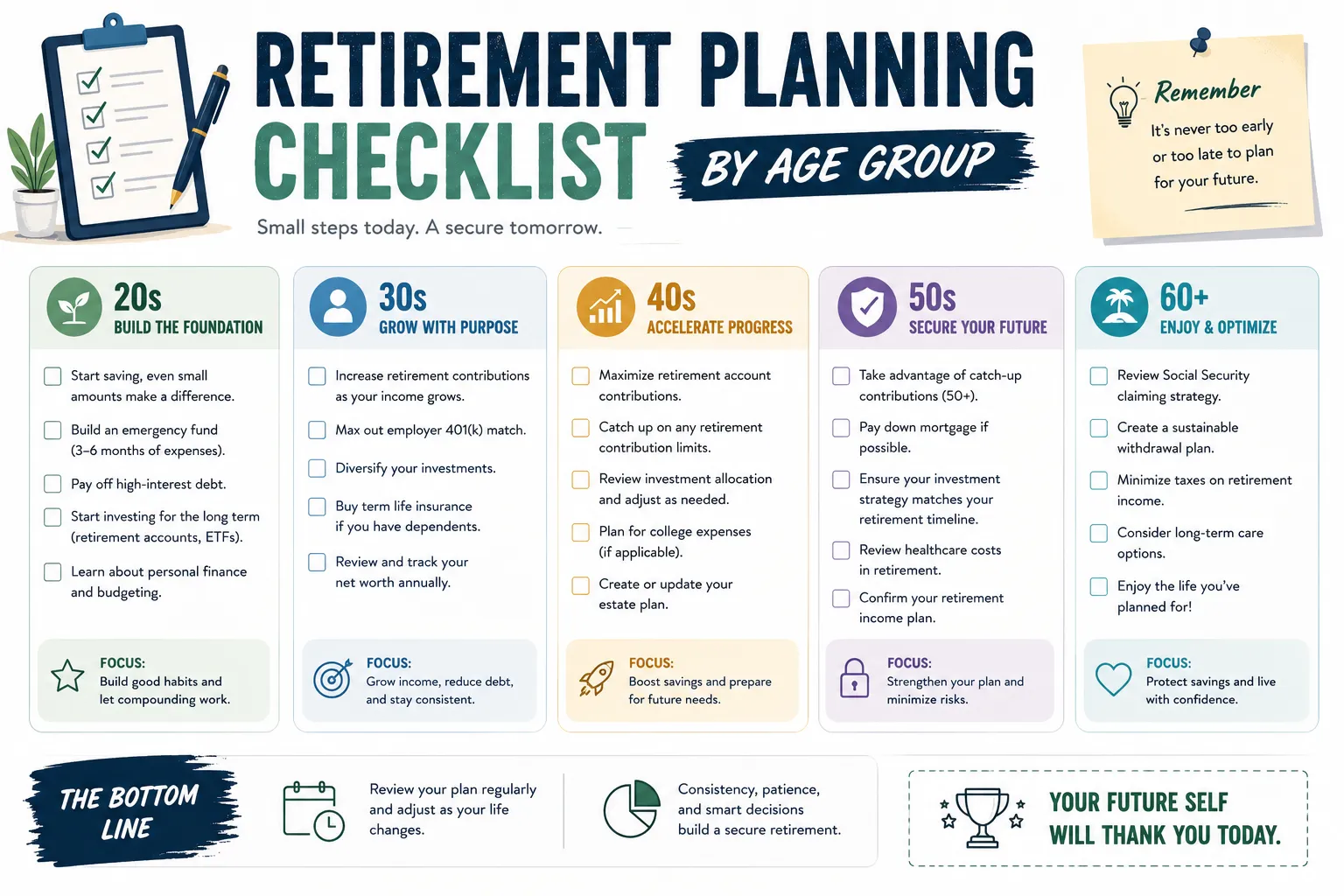
Retirement Planning Checklist by Age Group
Retirement planning is one of the most important financial goals individuals will pursue throughout their lives. Yet many people underestimate how much money they will need to retire comfortably or delay planning until it becomes significantly more difficult to achieve their objectives. The reality is that retirement success is rarely determined by a single investment decision. Instead, it is the result of consistent saving, strategic investing, tax-efficient wealth accumulation, proper risk management, and disciplined financial planning over several decades.
In 2026, retirement planning has become more complex than ever. Increasing life expectancy, healthcare costs, inflation concerns, market volatility, evolving tax regulations, and changing retirement lifestyles require investors to take a proactive approach toward building long-term financial security. Fortunately, individuals who follow a structured retirement roadmap can dramatically improve their chances of achieving financial independence.
This comprehensive retirement planning checklist provides age-specific guidance for investors in their 20s, 30s, 40s, 50s, and 60s. Whether you are just starting your career or preparing to retire within the next decade, these strategies can help you maximize savings, optimize investments, and create sustainable retirement income.
Why Retirement Planning Should Start Early
The most powerful advantage available to investors is time. Compound growth allows investments to generate returns on both principal and previous earnings. The earlier retirement contributions begin, the less capital may be required to achieve long-term goals.
| Starting Age | Monthly Investment | Assumed Annual Return | Potential Value at Age 65 |
|---|---|---|---|
| 25 | $500 | 8% | Over $1 Million |
| 35 | $500 | 8% | Approximately $560,000 |
| 45 | $500 | 8% | Approximately $280,000 |
This example highlights why delaying retirement planning can significantly impact future wealth accumulation.
Retirement Planning Goals in Your 20s
Your 20s represent the foundation-building stage of retirement planning. While retirement may seem far away, the decisions made during this decade often have the greatest long-term impact.
Checklist for Your 20s
- Establish an emergency fund covering 3 to 6 months of expenses.
- Begin contributing to retirement accounts immediately.
- Take full advantage of employer matching contributions.
- Develop a long-term investment strategy.
- Build strong financial habits.
- Avoid excessive consumer debt.
- Learn investment fundamentals.
- Create a personal net worth tracking system.
Recommended Asset Allocation
Because retirement remains decades away, younger investors can generally tolerate greater portfolio volatility in pursuit of long-term growth.
| Asset Class | Suggested Allocation |
|---|---|
| US Stocks | 60% |
| International Stocks | 25% |
| Bonds | 5% |
| REITs | 5% |
| Cash | 5% |
Retirement Planning Goals in Your 30s
Your 30s often involve major life milestones such as marriage, homeownership, business ownership, and raising children. Retirement planning should remain a priority despite increasing financial responsibilities.
Checklist for Your 30s
- Increase retirement contribution rates annually.
- Review investment allocations.
- Protect income with appropriate insurance coverage.
- Eliminate high-interest debt.
- Build multiple income streams.
- Establish long-term financial goals.
- Increase tax-efficient investing.
- Consider real estate investments.
Financial Milestones
| Age Range | Retirement Savings Target |
|---|---|
| 30 | 1x Annual Salary |
| 35 | 2x Annual Salary |
| 39 | 3x Annual Salary |
These benchmarks help investors assess retirement progress relative to long-term goals.
Retirement Planning Goals in Your 40s
Your 40s are often considered the wealth accumulation decade. Many investors experience peak earning years during this period, making it an ideal time to accelerate retirement savings.
Checklist for Your 40s
- Maximize retirement account contributions.
- Review retirement income projections.
- Increase investment diversification.
- Develop a comprehensive tax strategy.
- Evaluate healthcare planning.
- Update estate planning documents.
- Monitor portfolio risk levels.
- Expand passive income sources.
Investment Priorities
Investors in their 40s should balance growth with risk management while maintaining exposure to long-term wealth-building assets.
| Asset Class | Suggested Allocation |
|---|---|
| Equities | 70% |
| Fixed Income | 15% |
| Real Estate | 10% |
| Cash | 5% |
Retirement Planning Goals in Your 50s
Your 50s represent the transition phase from wealth accumulation to retirement preparation. Investors should focus on maximizing savings and refining retirement income strategies.
Checklist for Your 50s
- Utilize catch-up retirement contributions when available.
- Reduce unnecessary financial risks.
- Review Social Security projections.
- Develop retirement withdrawal strategies.
- Evaluate healthcare costs.
- Pay down remaining debt.
- Review insurance coverage.
- Optimize tax planning.
Retirement Savings Benchmarks
| Age | Suggested Retirement Savings |
|---|---|
| 50 | 6x Annual Salary |
| 55 | 8x Annual Salary |
| 60 | 10x Annual Salary |
These targets help assess readiness for retirement.
Retirement Planning Goals in Your 60s
Investors entering their 60s should focus heavily on retirement income sustainability and wealth preservation.
Checklist for Your 60s
- Create a retirement income plan.
- Estimate annual retirement expenses.
- Evaluate healthcare and long-term care needs.
- Finalize estate planning documents.
- Reduce portfolio concentration risks.
- Review withdrawal strategies.
- Maintain adequate liquidity.
- Plan for required distributions where applicable.
The Four Pillars of Retirement Planning
1. Savings Discipline
Consistent contributions remain the foundation of retirement success. Increasing savings rates over time can significantly improve retirement readiness.
2. Investment Growth
Retirement portfolios should be designed to generate growth while managing risk appropriately for the investor's stage of life.
3. Tax Efficiency
Tax planning can preserve more wealth and increase retirement income.
- Tax-deferred accounts.
- Tax-free growth opportunities.
- Capital gains management.
- Estate planning strategies.
4. Income Planning
Retirement income planning focuses on converting accumulated assets into sustainable cash flow.
Common Retirement Planning Mistakes
Many investors undermine retirement success by making avoidable mistakes.
- Starting too late.
- Saving too little.
- Ignoring inflation.
- Overestimating future returns.
- Underestimating healthcare expenses.
- Failing to diversify.
- Not updating retirement plans.
- Ignoring tax planning.
Healthcare Planning for Retirement
Healthcare costs remain one of the largest retirement expenses.
| Healthcare Consideration | Importance |
|---|---|
| Medical Insurance | Essential |
| Prescription Costs | High Priority |
| Long-Term Care | Critical |
| Emergency Medical Expenses | Important |
Including healthcare costs in retirement projections improves financial preparedness.
Building Passive Income for Retirement
Passive income sources can supplement retirement withdrawals and improve financial security.
- Dividend-paying stocks.
- Dividend ETFs.
- Rental properties.
- REITs.
- Bond portfolios.
- Private credit investments.
Multiple income streams can reduce pressure on retirement savings.
How High Net Worth Individuals Prepare for Retirement
Many affluent investors take a comprehensive approach to retirement planning.
| Strategy | Purpose |
|---|---|
| Diversified Investments | Risk Management |
| Tax Planning | Wealth Preservation |
| Estate Planning | Generational Wealth Transfer |
| Passive Income Assets | Cash Flow Generation |
| Alternative Investments | Portfolio Diversification |
Retirement Planning Checklist Summary
| Age Group | Primary Focus |
|---|---|
| 20s | Build Habits & Start Investing |
| 30s | Increase Contributions |
| 40s | Accelerate Wealth Building |
| 50s | Maximize Savings & Prepare Income Plan |
| 60s+ | Preserve Wealth & Generate Income |
Conclusion
Retirement planning is a lifelong process that evolves through each stage of life. The earlier investors begin saving and investing, the more powerful compound growth becomes. However, meaningful progress can still be achieved at any age through disciplined saving, strategic investing, tax-efficient planning, and effective risk management.
By following this retirement planning checklist by age group, investors can create a structured roadmap toward financial independence and long-term retirement security. Whether you are just starting your career, entering peak earning years, or approaching retirement, a proactive retirement strategy can help ensure that your future lifestyle goals remain achievable while protecting the wealth you have worked hard to build.