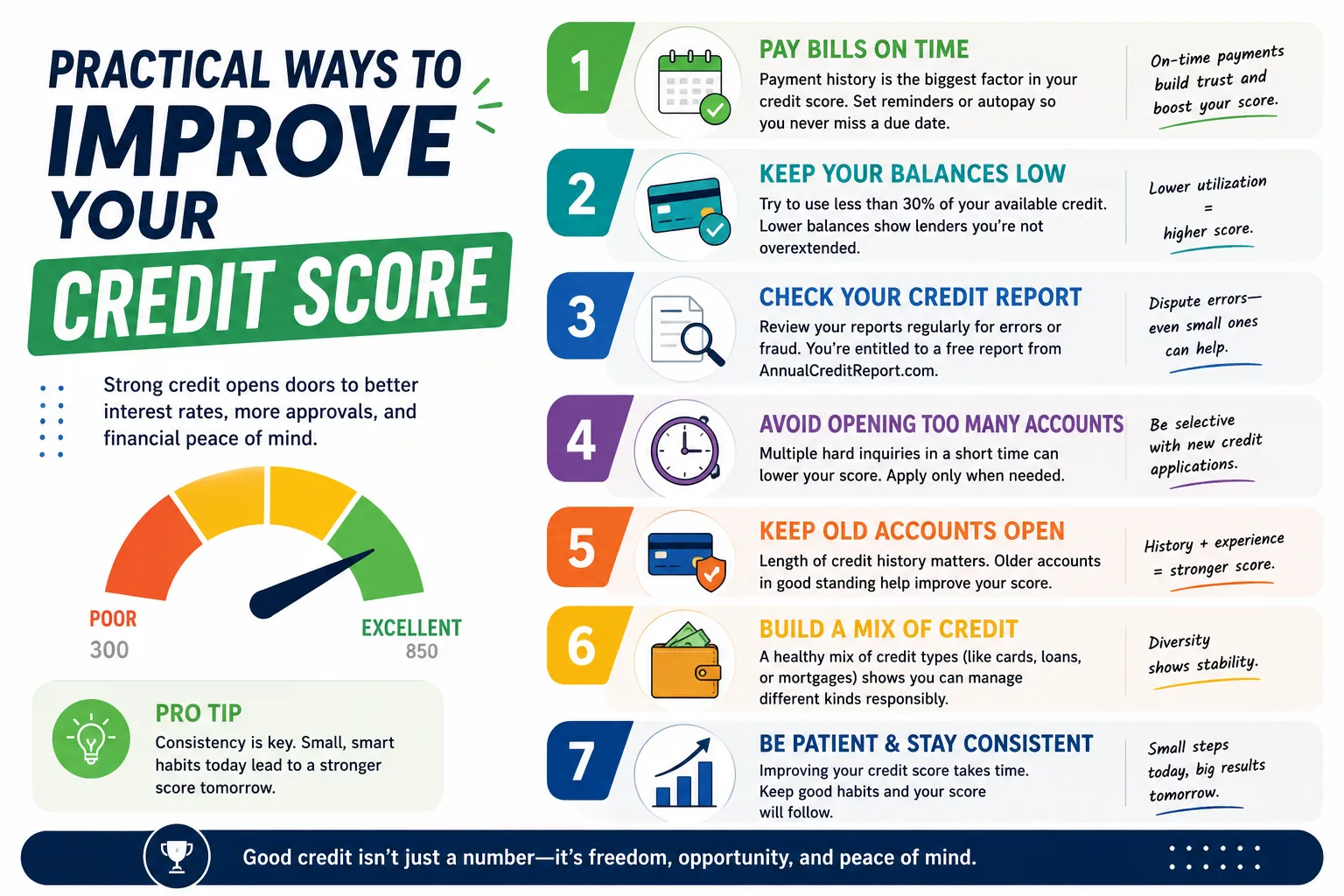
Practical Ways to Improve Your Credit Score
Your credit score is one of the most important numbers in your financial life. It influences your ability to qualify for mortgages, auto loans, personal loans, business financing, premium credit cards, apartment rentals, and even certain employment opportunities. A higher credit score can unlock lower interest rates, better lending terms, increased borrowing power, and significant long-term savings.
Many consumers underestimate how much their credit score impacts their financial future. Even a small improvement in your score can reduce borrowing costs substantially over the life of a mortgage, auto loan, or business loan. Fortunately, improving your credit score does not require complicated financial strategies. Consistent application of proven credit-building habits can deliver meaningful results over time.
This comprehensive guide explores practical and effective ways to improve your credit score while building a stronger overall financial foundation.
Understanding What a Credit Score Measures
A credit score is a numerical representation of your creditworthiness. Lenders use it to evaluate the likelihood that you will repay borrowed money according to agreed terms.
Credit scoring models analyze several factors, including:
- Payment history
- Credit utilization ratio
- Length of credit history
- Types of credit accounts
- Recent credit inquiries
These factors combine to create a score that helps lenders assess risk and determine loan eligibility.
| Credit Score Range | Credit Rating | Typical Lending Impact |
|---|---|---|
| 800-850 | Exceptional | Best Interest Rates |
| 740-799 | Very Good | Excellent Loan Terms |
| 670-739 | Good | Generally Approved |
| 580-669 | Fair | Higher Interest Rates |
| 300-579 | Poor | Limited Credit Access |
Review Your Credit Reports Regularly
The first step toward improving your credit score is understanding your current credit profile.
Carefully review your credit reports for:
- Incorrect personal information
- Fraudulent accounts
- Duplicate accounts
- Incorrect payment histories
- Reporting errors
- Outdated negative information
Errors can negatively impact your credit score and should be disputed promptly when discovered.
Always Pay Bills on Time
Payment history is generally the most influential component of credit scoring models.
Late payments can remain on credit reports for years and may significantly reduce your score.
Strategies to improve payment consistency include:
- Automatic payments
- Calendar reminders
- Mobile banking alerts
- Bill payment scheduling
- Budgeting systems
Making every payment on time demonstrates financial responsibility and builds lender confidence.
Reduce Credit Utilization Ratios
Credit utilization measures how much of your available revolving credit is currently being used.
For example, if you have:
- Total credit limit: $10,000
- Current balance: $3,000
Your utilization ratio equals 30%.
Most financial experts recommend maintaining utilization below 30%, while scores often improve further when utilization remains below 10%.
| Utilization Rate | Potential Credit Impact |
|---|---|
| Below 10% | Excellent |
| 10%-30% | Good |
| 30%-50% | Moderate Risk |
| Above 50% | Negative Impact |
Pay Credit Card Balances More Frequently
Many consumers wait until statement due dates before making payments.
However, making multiple payments throughout the month can lower reported balances and improve utilization ratios.
This approach may be particularly effective for:
- Business owners
- Frequent travelers
- High-spending households
- Individuals rebuilding credit
Lower reported balances often contribute to stronger credit scores.
Avoid Closing Old Credit Accounts
Length of credit history plays an important role in credit scoring.
Older accounts help establish a longer average account age, which can positively influence scores.
Closing long-standing accounts may:
- Reduce total available credit
- Increase utilization ratios
- Shorten average account age
- Potentially lower scores
When possible, keep older accounts active and in good standing.
Diversify Your Credit Mix
Credit scoring systems often reward responsible management of multiple credit types.
Examples include:
- Credit cards
- Auto loans
- Mortgages
- Student loans
- Personal loans
- Business credit lines
A diversified credit profile demonstrates experience managing different forms of debt.
Limit New Credit Applications
Each hard inquiry generated by a credit application may temporarily affect your score.
Frequent applications can signal financial stress to lenders.
Before applying for new credit:
- Compare options carefully
- Apply selectively
- Avoid unnecessary inquiries
- Research qualification requirements
Strategic applications help preserve your credit profile.
Create a Debt Reduction Plan
Reducing outstanding debt remains one of the fastest ways to strengthen credit health.
Popular repayment strategies include:
- Debt Avalanche Method
- Debt Snowball Method
- Debt Consolidation
- Balance Transfer Programs
- Refinancing Solutions
Lower debt balances improve utilization ratios and enhance overall financial stability.
Become an Authorized User
Being added as an authorized user on a responsible cardholder's account may help establish or strengthen credit history.
Ideal primary account holders typically have:
- Long credit histories
- Low utilization rates
- Strong payment records
- Responsible financial habits
This strategy can provide meaningful benefits when implemented carefully.
Use Secured Credit Cards Strategically
For individuals rebuilding credit, secured credit cards often provide an effective starting point.
These cards require a refundable security deposit and allow users to demonstrate responsible borrowing behavior.
Best practices include:
- Making small purchases
- Paying balances in full
- Avoiding high utilization
- Maintaining account longevity
Responsible use can help establish positive payment history.
| Credit Improvement Strategy | Potential Impact | Time Horizon |
|---|---|---|
| On-Time Payments | High | 3-12 Months |
| Lower Utilization | High | 1-3 Months |
| Credit Report Corrections | Moderate to High | 1-6 Months |
| Debt Reduction | High | 6-24 Months |
| Credit Mix Diversification | Moderate | Long-Term |
Monitor Credit Reports Frequently
Regular monitoring allows you to track progress and quickly identify potential issues.
Monitoring helps detect:
- Identity theft
- Reporting errors
- Fraudulent accounts
- Unexpected inquiries
- Credit score changes
Early detection can prevent significant long-term damage.
Negotiate Outstanding Collections
If collection accounts exist on your report, addressing them may improve your financial standing.
Potential solutions include:
- Settlement agreements
- Payment plans
- Pay-for-delete negotiations where applicable
- Debt validation requests
Always verify the legitimacy of collection accounts before making payments.
Build Strong Financial Habits
Credit score improvement is closely linked to broader financial wellness.
Important habits include:
- Maintaining a budget
- Building emergency savings
- Avoiding excessive debt
- Tracking spending
- Managing cash flow effectively
Strong financial habits support sustainable credit growth over time.
The Relationship Between Credit Scores and Borrowing Costs
Many consumers focus solely on achieving a higher score without considering the long-term financial benefits.
Improved credit scores can lead to:
- Lower mortgage interest rates
- Reduced auto loan costs
- Better personal loan offers
- Higher credit limits
- More favorable refinancing opportunities
Even small interest rate reductions can save thousands of dollars over the life of a loan.
Improve Cash Flow to Support Credit Health
Strong cash flow management helps maintain consistent debt payments and avoid missed obligations.
Methods for improving cash flow include:
- Increasing income
- Reducing discretionary expenses
- Negotiating recurring bills
- Eliminating unnecessary subscriptions
- Creating emergency reserves
Better cash flow strengthens every aspect of personal financial management.
Avoid Common Credit Score Mistakes
Several common mistakes can hinder credit improvement efforts.
- Missing payments
- Maxing out credit cards
- Applying for excessive credit
- Ignoring credit reports
- Closing old accounts unnecessarily
- Carrying persistent high balances
Avoiding these behaviors can accelerate score improvement.
Credit Scores and Major Financial Goals
Strong credit profiles play a significant role in achieving major financial milestones.
Examples include:
- Homeownership
- Business financing
- Investment property purchases
- Vehicle financing
- Debt refinancing
- Financial independence planning
Improving your score today can create valuable opportunities in the future.
Long-Term Credit Building Strategy
The most successful credit improvement plans focus on consistency rather than quick fixes.
Long-term success generally includes:
- On-time payments
- Low utilization ratios
- Responsible borrowing
- Regular monitoring
- Financial discipline
Over time, these habits build a strong financial reputation and increase borrowing flexibility.
Conclusion
Improving your credit score is one of the most valuable investments you can make in your financial future. A stronger credit profile can reduce borrowing costs, increase access to financial opportunities, improve loan approval odds, and support long-term wealth-building goals.
By paying bills on time, lowering credit utilization, maintaining older accounts, reducing debt, monitoring credit reports, and practicing responsible financial habits, you can steadily improve your score and strengthen your overall financial position. Credit improvement is a gradual process, but the rewards often extend far beyond the credit score itself, creating lasting benefits throughout your financial journey.