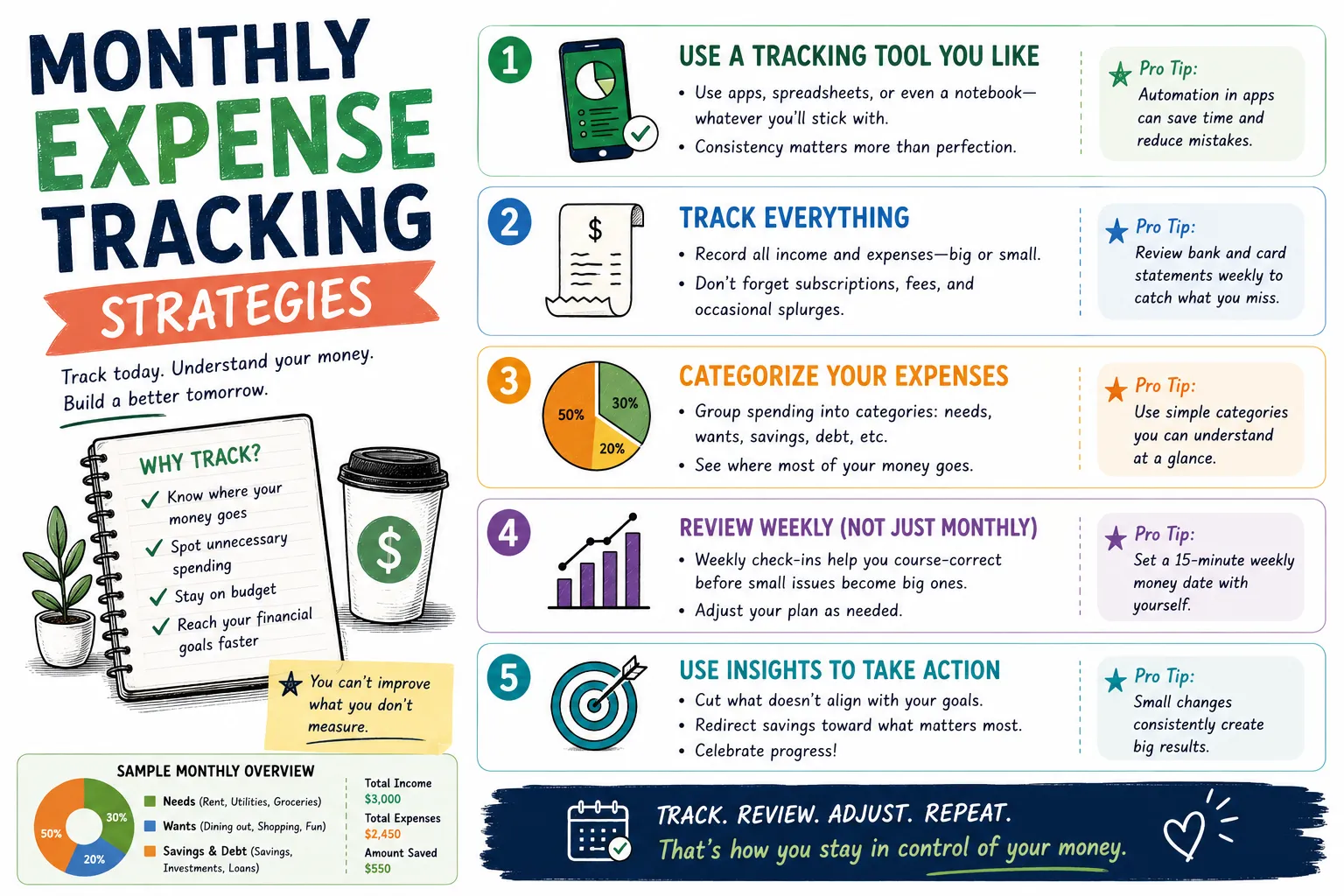
Monthly Expense Tracking Strategies
Monthly expense tracking is one of the most powerful financial habits that individuals, families, entrepreneurs, and business owners can adopt to improve financial stability and achieve long-term wealth-building goals. While many people focus on increasing income, true financial success often comes from understanding exactly where money is being spent and optimizing every dollar for maximum value.
In today’s digital economy, consumers face countless spending opportunities through subscriptions, online shopping, digital services, travel expenses, dining, entertainment, insurance costs, healthcare expenses, and recurring bills. Without a proper expense tracking system, financial leaks can silently reduce savings potential and delay important goals such as homeownership, retirement planning, investment growth, debt reduction, and financial independence.
This comprehensive guide explores the most effective monthly expense tracking strategies, budgeting frameworks, financial tools, and money management techniques that can help individuals gain control of their finances and make smarter financial decisions.
Why Monthly Expense Tracking Matters
Expense tracking provides visibility into spending behavior. Many individuals underestimate how much money they spend each month because small daily purchases often go unnoticed.
Effective expense tracking helps:
- Identify unnecessary spending habits
- Increase monthly savings
- Reduce financial stress
- Improve cash flow management
- Accelerate debt repayment
- Support investment goals
- Create accurate budgets
- Build long-term financial security
When spending becomes measurable, it becomes manageable.
Understanding Cash Flow
Before creating an expense tracking system, it is important to understand personal cash flow.
Cash flow represents the movement of money into and out of your financial accounts.
| Cash Flow Component | Examples |
|---|---|
| Income | Salary, bonuses, freelance income, dividends |
| Fixed Expenses | Mortgage, rent, insurance, utilities |
| Variable Expenses | Food, fuel, shopping, entertainment |
| Savings | Emergency fund, investments, retirement |
| Debt Payments | Loans, credit cards, financing |
Understanding cash flow provides the foundation for accurate expense tracking and financial planning.
Step 1: Record Every Expense
The first rule of expense tracking is simple: track everything.
This includes:
- Coffee purchases
- Streaming subscriptions
- Dining expenses
- Transportation costs
- Utility bills
- Insurance premiums
- Online purchases
- Professional services
- Healthcare expenses
- Investment contributions
Even small purchases can add up significantly over time. Recording every transaction creates financial awareness and reveals spending patterns that may otherwise remain hidden.
Step 2: Categorize Spending Effectively
Organizing expenses into categories allows for easier analysis and better decision-making.
| Category | Typical Expenses |
|---|---|
| Housing | Rent, mortgage, maintenance |
| Transportation | Fuel, public transit, car payments |
| Food | Groceries, restaurants, delivery |
| Insurance | Health, auto, home insurance |
| Healthcare | Medical expenses, prescriptions |
| Entertainment | Movies, subscriptions, events |
| Savings | Emergency funds, investments |
| Debt | Credit cards, loans |
Categorization allows individuals to identify areas where adjustments can have the greatest impact.
Step 3: Use the Right Expense Tracking Tools
Modern financial technology provides numerous tools for tracking expenses efficiently.
Popular options include:
- Budgeting applications
- Banking dashboards
- Spreadsheet templates
- Expense tracking software
- Personal finance platforms
- Mobile budgeting apps
Automation reduces manual effort and improves tracking accuracy.
The 50/30/20 Budgeting Framework
One of the most widely used budgeting methods is the 50/30/20 rule.
| Allocation | Purpose |
|---|---|
| 50% | Needs and essential expenses |
| 30% | Wants and discretionary spending |
| 20% | Savings and investments |
This framework creates balance while ensuring financial goals remain a priority.
Monitor Subscription Spending
Subscription services have become one of the fastest-growing household expense categories.
Common subscriptions include:
- Video streaming services
- Music platforms
- Cloud storage solutions
- Software subscriptions
- Fitness memberships
- News and media subscriptions
Regular audits can uncover unused services that unnecessarily drain monthly cash flow.
Track Fixed vs Variable Expenses
Understanding the difference between fixed and variable expenses helps improve budgeting flexibility.
| Fixed Expenses | Variable Expenses |
|---|---|
| Rent | Dining Out |
| Mortgage | Entertainment |
| Insurance | Shopping |
| Loan Payments | Travel |
| Internet | Personal Care |
Variable expenses often provide the greatest opportunities for cost reduction.
Establish Monthly Spending Limits
Expense tracking becomes significantly more effective when paired with spending limits.
Examples include:
- Dining budget
- Entertainment budget
- Shopping allowance
- Travel budget
- Subscription budget
Spending limits create accountability and help prevent lifestyle inflation.
Analyze Spending Trends Monthly
Monthly reviews provide valuable insights into spending behavior.
Questions to ask include:
- Which category increased the most?
- What expenses were unexpected?
- Where can spending be reduced?
- Did savings goals get funded?
- Were financial priorities maintained?
Regular analysis transforms expense tracking into actionable financial intelligence.
Build an Emergency Fund Through Expense Optimization
Expense tracking often reveals opportunities to redirect spending toward emergency savings.
Financial experts generally recommend maintaining:
- 3 months of expenses minimum
- 6 months for increased stability
- 12 months for maximum security
A strong emergency fund protects against unexpected financial disruptions.
Use Expense Tracking to Accelerate Debt Repayment
Debt reduction becomes easier when unnecessary spending is identified.
Money saved through expense optimization can be redirected toward:
- Credit card balances
- Personal loans
- Student loans
- Auto loans
- Mortgage principal reduction
Faster debt repayment reduces interest costs and improves financial flexibility.
Expense Tracking for Investment Growth
Many investors overlook how small spending reductions can significantly increase long-term investment returns.
For example, reducing monthly discretionary spending by $300 and investing those funds consistently can generate substantial portfolio growth over time.
| Monthly Investment | Years | Estimated Value at 8% |
|---|---|---|
| $300 | 20 | $176,000+ |
| $500 | 20 | $294,000+ |
| $1,000 | 20 | $589,000+ |
Expense tracking directly supports wealth-building goals.
Common Expense Tracking Mistakes
| Mistake | Financial Impact |
|---|---|
| Not Tracking Small Purchases | Hidden spending increases |
| Ignoring Subscriptions | Recurring expense leaks |
| Failing to Review Reports | Missed optimization opportunities |
| No Budget Categories | Poor spending visibility |
| Inconsistent Tracking | Inaccurate financial data |
Advanced Expense Tracking Strategies
Individuals seeking greater financial control often implement advanced tracking methods.
- Cash flow forecasting
- Annual expense projections
- Net worth tracking
- Investment contribution monitoring
- Category spending benchmarks
- Financial dashboard reporting
- Automated savings transfers
- Expense ratio analysis
These techniques provide deeper financial insights and support long-term planning.
Creating a Sustainable Expense Tracking Habit
The most effective system is one that can be maintained consistently. Expense tracking should become a routine part of personal financial management.
Practical habits include:
- Review transactions daily
- Update expense records weekly
- Analyze reports monthly
- Adjust budgets quarterly
- Review financial goals annually
Consistency is more important than complexity.
The Connection Between Expense Tracking and Financial Independence
Financial independence requires maximizing the gap between income and expenses. Expense tracking provides the data needed to optimize this gap and redirect resources toward investments, retirement accounts, passive income assets, and wealth-building opportunities.
Many financially successful individuals attribute a significant portion of their success to understanding their spending behavior and making intentional financial decisions.
Final Thoughts
Monthly expense tracking is not simply an accounting exercise—it is a powerful wealth-building tool. By recording transactions, categorizing spending, analyzing trends, eliminating waste, optimizing budgets, and redirecting savings toward investments, individuals can significantly improve their financial future.
The path to financial stability, wealth accumulation, debt reduction, and financial independence begins with awareness. Every dollar tracked creates an opportunity to make smarter decisions and move closer to long-term financial goals. Whether you are just starting your financial journey or looking to optimize an existing budget, implementing these monthly expense tracking strategies can create lasting benefits for years to come.