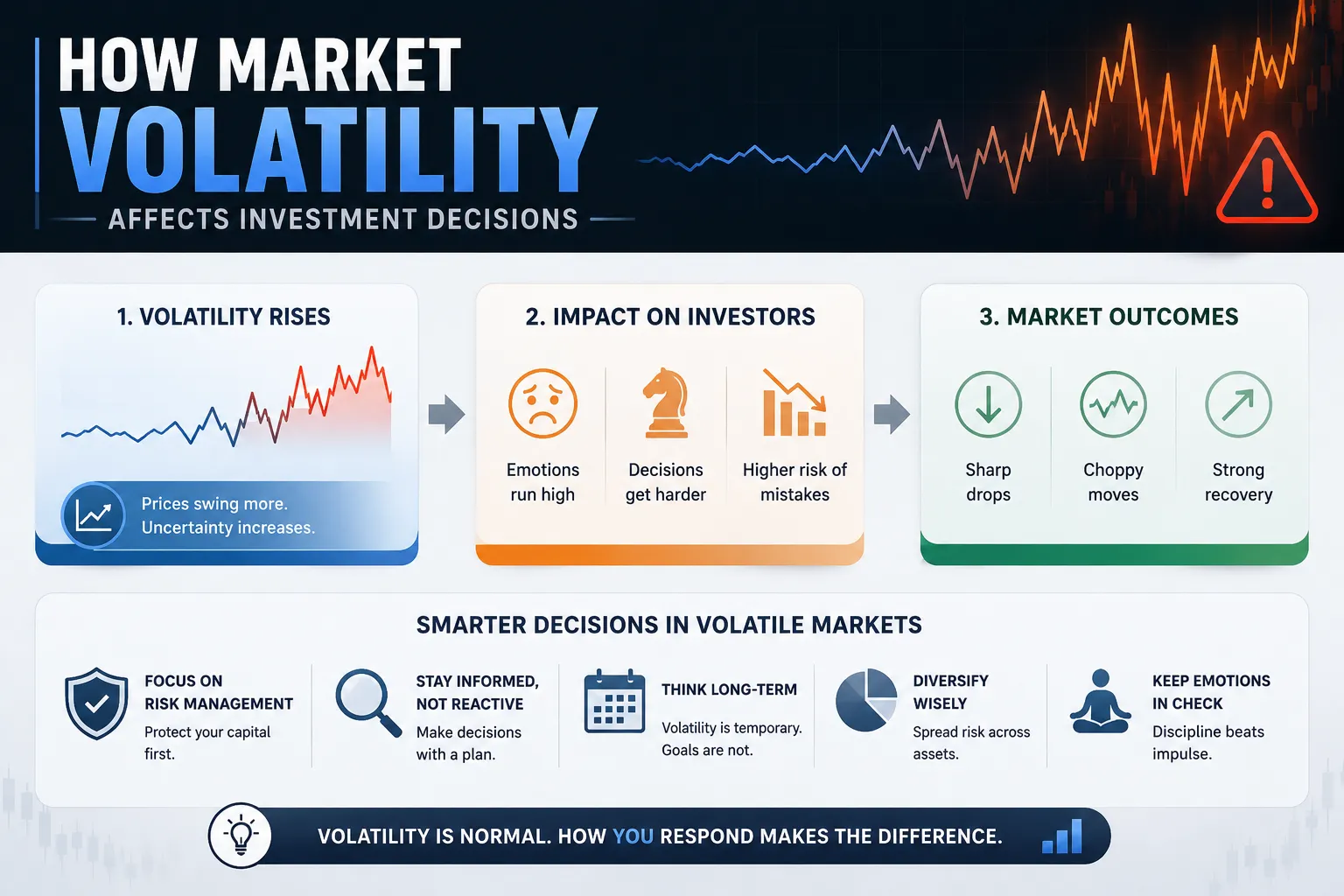
How Market Volatility Affects Investment Decisions
Market volatility is one of the most influential forces shaping investor behavior, portfolio performance, and long-term wealth-building outcomes. Whether investing in stocks, bonds, exchange-traded funds (ETFs), mutual funds, real estate investment trusts (REITs), commodities, or alternative assets, volatility directly impacts how investors perceive risk and make financial decisions.
Periods of heightened volatility often trigger emotional responses such as fear, uncertainty, greed, and panic. These emotions can lead investors to abandon carefully constructed financial plans, sell assets at unfavorable prices, or miss long-term growth opportunities. At the same time, experienced investors frequently view volatility as an opportunity to acquire quality assets at attractive valuations.
Understanding how market volatility works, why it occurs, and how it affects investment decisions is essential for anyone seeking to build, protect, and grow wealth. From retirement planning and portfolio diversification to tax-efficient investing and risk management, volatility influences nearly every aspect of financial strategy.
This comprehensive guide explores the causes of market volatility, its impact on investor behavior, asset classes that react differently during volatile periods, and practical strategies investors can use to navigate uncertain markets successfully.
What Is Market Volatility?
Market volatility refers to the degree of variation in asset prices over time. When markets experience large and rapid price movements, volatility is considered high. When price fluctuations are relatively small and predictable, volatility is considered low.
Volatility affects virtually every financial market, including:
- Stock Markets
- Bond Markets
- Foreign Exchange (Forex)
- Cryptocurrency Markets
- Commodities
- Real Estate Securities
- Options Markets
Volatility itself is not inherently positive or negative. Instead, it represents uncertainty regarding future price movements.
| Volatility Level | Market Characteristics |
|---|---|
| Low | Stable Prices, Predictable Movements |
| Moderate | Normal Market Fluctuations |
| High | Large Price Swings and Increased Uncertainty |
| Extreme | Rapid Market Reactions and Investor Panic |
Common Causes of Market Volatility
Volatility can emerge from a wide variety of economic, financial, political, and psychological factors.
Economic Data Releases
Reports related to inflation, employment, consumer spending, manufacturing activity, and economic growth frequently influence market expectations.
Interest Rate Changes
Central bank policies often have significant effects on stock valuations, bond prices, and investor sentiment.
Corporate Earnings
Unexpected earnings results can create substantial price movements in individual stocks and entire sectors.
Geopolitical Events
Wars, trade disputes, elections, and regulatory changes often increase market uncertainty.
Technological Disruption
Artificial intelligence, automation, cybersecurity developments, and digital transformation trends can significantly impact industry performance.
Investor Psychology
Fear and greed remain powerful drivers of market behavior, often amplifying volatility beyond fundamental factors.
Why Volatility Matters to Investors
Volatility influences investment decisions because it directly affects perceived risk and expected returns.
Key areas impacted include:
- Portfolio allocation
- Risk tolerance assessments
- Retirement planning
- Capital preservation strategies
- Investment time horizons
- Asset selection
- Cash management decisions
Understanding volatility helps investors maintain discipline during challenging market environments.
Volatility and Investor Psychology
Behavioral finance research demonstrates that investors often react emotionally during periods of market turbulence.
Common emotional responses include:
- Fear of losses
- Panic selling
- Fear of missing out (FOMO)
- Overconfidence during rallies
- Short-term thinking
These emotional reactions frequently lead to poor investment decisions.
| Emotion | Typical Investor Behavior |
|---|---|
| Fear | Selling During Market Declines |
| Greed | Taking Excessive Risk |
| Panic | Abandoning Investment Plans |
| Overconfidence | Increasing Exposure Excessively |
| FOMO | Buying at Elevated Prices |
Impact on Portfolio Allocation
Volatility often causes investors to reassess their portfolio allocations.
For example:
- Risk-averse investors may increase bond exposure.
- Growth investors may seek opportunities in market corrections.
- Retirees may prioritize income-producing assets.
- Institutional investors may rebalance portfolios.
Asset allocation remains one of the most important determinants of long-term portfolio performance.
How Different Asset Classes React to Volatility
Stocks
Stocks generally experience the highest sensitivity to market volatility.
Growth-oriented sectors such as technology, artificial intelligence, cloud computing, and cybersecurity may experience larger price swings.
Bonds
High-quality bonds often provide stability during volatile market periods.
Government securities and investment-grade bonds are frequently viewed as defensive investments.
Real Estate
Real estate investments may react differently depending on interest rates, economic growth, and property sector fundamentals.
Commodities
Gold, silver, and certain commodities often attract investors seeking diversification and inflation protection.
| Asset Class | Typical Volatility Sensitivity |
|---|---|
| Growth Stocks | Very High |
| Value Stocks | Moderate |
| Bonds | Low to Moderate |
| Real Estate | Moderate |
| Gold | Moderate |
| Cash | Very Low |
The Role of Diversification During Volatile Markets
Diversification is one of the most effective tools for managing volatility.
A diversified portfolio may include:
- Domestic equities
- International equities
- Government bonds
- Corporate bonds
- Real estate investments
- Alternative assets
- Cash reserves
Because different asset classes often respond differently to market events, diversification can reduce overall portfolio risk.
Market Corrections and Investment Opportunities
Volatility often creates market corrections, which occur when prices decline significantly from recent highs.
While corrections can be uncomfortable, they also create opportunities.
Potential benefits include:
- Lower valuations
- Higher dividend yields
- Improved future return potential
- Portfolio rebalancing opportunities
Many long-term investors view corrections as opportunities rather than threats.
Dollar-Cost Averaging and Volatility
Dollar-cost averaging is a strategy that involves investing fixed amounts at regular intervals.
Advantages during volatile markets include:
- Reduces market timing risk
- Encourages disciplined investing
- Automatically purchases more shares at lower prices
- Minimizes emotional decision-making
This strategy is widely used in retirement accounts and long-term investment plans.
Volatility and Retirement Planning
Market volatility plays a major role in retirement planning.
Investors approaching retirement often focus on:
- Capital preservation
- Income generation
- Portfolio stability
- Withdrawal sustainability
Younger investors typically have longer time horizons and may tolerate greater volatility in pursuit of higher returns.
| Investor Stage | Typical Volatility Tolerance |
|---|---|
| Early Career | High |
| Mid-Career | Moderate to High |
| Pre-Retirement | Moderate |
| Retired | Low to Moderate |
Risk Management Strategies During Volatility
Successful investors use risk management to navigate uncertain markets.
Portfolio Diversification
Spreading investments across multiple asset classes reduces concentration risk.
Asset Allocation
Maintaining strategic allocations helps investors avoid emotional decisions.
Emergency Funds
Adequate cash reserves reduce the need to sell investments during downturns.
Periodic Rebalancing
Rebalancing restores target portfolio allocations and enforces discipline.
Long-Term Perspective
Maintaining focus on long-term goals often reduces the impact of short-term volatility.
Technology Stocks and Volatility
Technology companies often experience greater volatility due to:
- Rapid innovation cycles
- Growth expectations
- Valuation sensitivity
- Competitive pressures
- Regulatory developments
Despite increased volatility, technology remains one of the strongest long-term growth sectors in modern markets.
Artificial Intelligence and Market Volatility
Artificial intelligence has become a major investment theme in recent years.
AI-related companies may experience heightened volatility because investors frequently adjust growth expectations based on technological developments, earnings reports, and industry adoption trends.
Long-term investors often evaluate AI investments within the context of broader portfolio objectives rather than short-term price fluctuations.
Common Mistakes Investors Make During Volatility
| Mistake | Potential Consequence |
|---|---|
| Panic Selling | Locking in Losses |
| Market Timing | Missing Recoveries |
| Overconcentration | Higher Risk Exposure |
| Ignoring Diversification | Portfolio Instability |
| Emotional Investing | Poor Decision Making |
Institutional Investors and Volatility
Large institutions often respond differently to volatility than individual investors.
Professional investors typically:
- Follow predetermined strategies
- Use sophisticated risk models
- Maintain diversified portfolios
- Rebalance systematically
- Focus on long-term objectives
These practices help institutions navigate uncertainty more effectively.
How Volatility Creates Long-Term Wealth Opportunities
Many of history's strongest investment opportunities emerged during periods of significant market volatility.
Volatile markets can create:
- Discounted valuations
- Enhanced future returns
- Tax-loss harvesting opportunities
- Portfolio optimization opportunities
Patient investors often benefit by maintaining discipline during uncertain periods.
Building a Volatility-Resistant Investment Strategy
A robust investment strategy should include:
- Clear financial goals
- Diversified asset allocation
- Risk management procedures
- Periodic portfolio reviews
- Long-term investment discipline
- Tax-efficient planning
These principles help investors remain focused regardless of market conditions.
Final Thoughts
Market volatility is an unavoidable aspect of investing. While periods of uncertainty can create anxiety and emotional decision-making, they also offer opportunities for disciplined investors to strengthen portfolios, acquire quality assets at attractive valuations, and position themselves for long-term growth.
Understanding how volatility affects investment decisions allows investors to make more informed choices regarding portfolio allocation, risk management, retirement planning, and wealth preservation. By maintaining diversification, following a structured investment plan, and focusing on long-term objectives, investors can navigate volatile markets with greater confidence and resilience.
Ultimately, successful investing is not about avoiding volatility—it is about learning how to manage it effectively while staying committed to long-term financial goals.