Algorithmic Trading: Benefits and Risks Explained
Algorithmic trading has transformed modern financial markets. What was once a niche strategy used primarily by large investment banks and hedge funds is now accessible to institutional investors, proprietary trading firms, asset managers, and even retail traders. Thanks to advances in artificial intelligence, machine learning, cloud computing, and financial technology, algorithmic trading has become one of the most influential forces in global markets.
Algorithmic trading, often called algo trading, uses computer programs to execute trades based on predefined rules and market conditions. Instead of manually analyzing charts and placing orders, algorithms automatically monitor markets, identify opportunities, and execute trades within milliseconds or even microseconds.
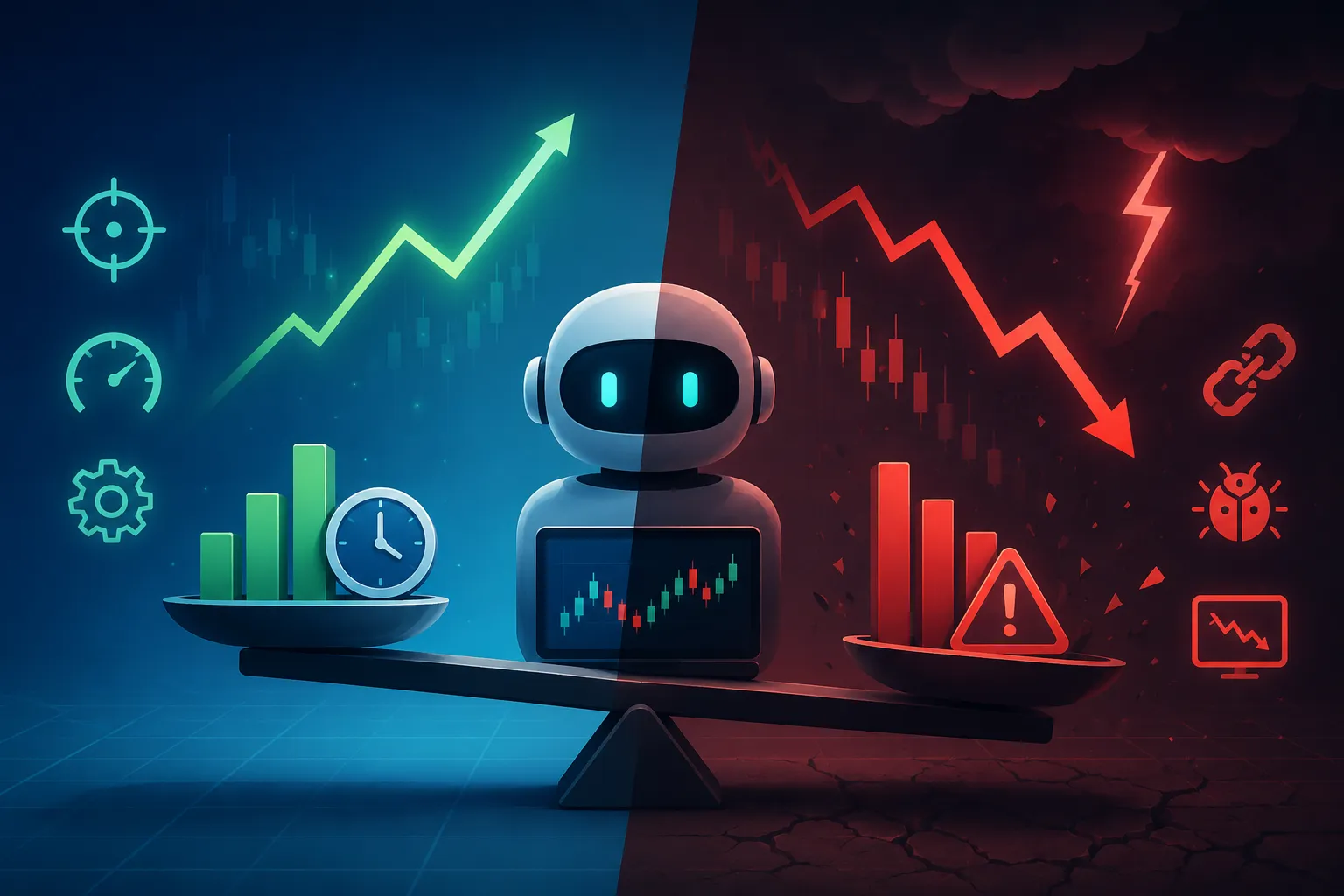
Today, a significant percentage of trading volume in major stock exchanges comes from automated systems. These algorithms help improve market efficiency, increase liquidity, reduce transaction costs, and remove emotional decision-making. However, algorithmic trading also introduces unique risks, including system failures, over-optimization, flash crashes, cybersecurity concerns, and increased market complexity.
This comprehensive guide explores how algorithmic trading works, its advantages and disadvantages, the technologies powering modern trading systems, and the risks investors should understand before adopting automated strategies.
What Is Algorithmic Trading?
Algorithmic trading is the use of computer programs to automatically execute financial market transactions according to predefined instructions.
These instructions may include:
- Price conditions
- Volume thresholds
- Technical indicators
- Time-based rules
- Statistical models
- Machine learning predictions
- Portfolio rebalancing criteria
When predefined conditions are met, the trading system automatically places buy or sell orders without requiring human intervention.
| Manual Trading | Algorithmic Trading |
|---|---|
| Human Decisions | Automated Decisions |
| Slower Execution | Millisecond Execution |
| Emotional Influence | Rule-Based Execution |
| Limited Scalability | Highly Scalable |
How Algorithmic Trading Works
Algorithmic trading systems follow a structured process.
- Collect market data.
- Analyze information using programmed rules.
- Identify trading opportunities.
- Execute orders automatically.
- Manage risk continuously.
- Monitor performance metrics.
Advanced systems can process thousands of data points simultaneously, far exceeding human analytical capabilities.
The Evolution of Algorithmic Trading
The growth of algorithmic trading has been driven by technological innovation.
Major developments include:
- Electronic exchanges
- High-speed internet connectivity
- Cloud computing infrastructure
- Artificial intelligence applications
- Big data analytics
- Machine learning models
- Low-latency trading networks
Today, algorithms influence trading across stocks, bonds, commodities, currencies, ETFs, options, futures, and cryptocurrency markets.
Types of Algorithmic Trading Strategies
Trend Following Strategies
Trend-following algorithms identify and trade in the direction of prevailing market trends.
Common indicators include:
- Moving averages
- MACD
- Trend channels
- Breakout levels
Mean Reversion Strategies
Mean reversion assumes prices eventually return to historical averages after significant deviations.
Statistical Arbitrage
Statistical arbitrage identifies pricing inefficiencies between related securities.
Market Making
Market-making algorithms continuously provide buy and sell quotes to enhance liquidity.
High-Frequency Trading (HFT)
HFT systems execute extremely large numbers of trades at very high speeds.
| Strategy Type | Primary Objective |
|---|---|
| Trend Following | Capture Momentum |
| Mean Reversion | Exploit Price Deviations |
| Statistical Arbitrage | Identify Pricing Inefficiencies |
| Market Making | Provide Liquidity |
| High-Frequency Trading | Capture Micro Opportunities |
Benefits of Algorithmic Trading
Elimination of Emotional Trading
One of the biggest advantages of algorithmic trading is the removal of emotional biases.
Algorithms do not experience:
- Fear
- Greed
- Panic
- Overconfidence
This helps ensure consistent execution.
Faster Trade Execution
Algorithms can react to market conditions almost instantly.
In fast-moving markets, speed can significantly impact profitability.
Improved Accuracy
Automated systems reduce human errors such as:
- Incorrect order entry
- Calculation mistakes
- Missed opportunities
- Delayed execution
Scalability
Algorithms can simultaneously monitor and trade hundreds or thousands of securities.
This scalability would be impossible for most manual traders.
Backtesting Capabilities
Trading strategies can be tested using historical market data before risking real capital.
| Benefit | Impact |
|---|---|
| Automation | Increased Efficiency |
| Speed | Better Execution |
| Discipline | Reduced Emotional Bias |
| Scalability | Broader Market Coverage |
| Backtesting | Strategy Validation |
The Rise of Artificial Intelligence in Trading
Artificial intelligence has significantly expanded algorithmic trading capabilities.
Modern AI systems can analyze:
- Price data
- Economic reports
- News articles
- Social media sentiment
- Corporate earnings releases
- Alternative datasets
Machine learning models continuously adapt as new information becomes available.
Machine Learning and Quantitative Finance
Machine learning enables algorithms to identify patterns that traditional statistical methods may overlook.
Applications include:
- Predictive modeling
- Risk forecasting
- Portfolio optimization
- Fraud detection
- Market sentiment analysis
Quantitative investment firms increasingly rely on machine learning to maintain competitive advantages.
Algorithmic Trading and Portfolio Management
Automated systems play a major role in portfolio management.
Applications include:
- Asset allocation
- Portfolio rebalancing
- Tax-loss harvesting
- Risk management
- Performance monitoring
Many robo-advisors use algorithmic frameworks to manage client portfolios efficiently.
Risks of Algorithmic Trading
While algorithmic trading offers significant benefits, it also introduces important risks.
Technology Failures
Software bugs, hardware failures, and connectivity disruptions can create substantial losses.
Over-Optimization
Strategies designed to fit historical data too perfectly may fail in live markets.
This issue is known as curve fitting.
Model Risk
Algorithms rely on assumptions that may not hold during changing market conditions.
Cybersecurity Threats
Automated systems are potential targets for cyberattacks.
Security breaches may compromise trading operations.
| Risk | Description |
|---|---|
| System Failure | Technical Malfunctions |
| Overfitting | Poor Real-World Performance |
| Cybersecurity | Unauthorized Access Risks |
| Liquidity Risk | Execution Challenges |
| Model Risk | Incorrect Assumptions |
Flash Crashes and Market Instability
One of the most discussed risks associated with algorithmic trading is the potential for flash crashes.
A flash crash occurs when prices experience rapid and severe declines within a short period.
Contributing factors may include:
- Automated selling pressure
- Liquidity withdrawal
- Feedback loops between algorithms
- Extreme market volatility
Although markets often recover quickly, flash crashes highlight the importance of risk controls.
Regulatory Considerations
Regulators worldwide continue to monitor algorithmic trading activities.
Key regulatory objectives include:
- Market stability
- Investor protection
- Fair market access
- Transparency requirements
- Risk management standards
Compliance remains a critical component of professional algorithmic trading operations.
Algorithmic Trading for Retail Investors
Retail investors now have access to tools previously reserved for institutions.
Popular solutions include:
- Trading APIs
- Automated trading platforms
- Robo-advisors
- Strategy builders
- Cloud-based trading systems
However, accessibility does not eliminate risk.
Investors should thoroughly understand strategy mechanics before deploying capital.
Risk Management Best Practices
Successful algorithmic traders emphasize risk management.
Position Sizing Controls
Limit exposure to individual positions.
Stop-Loss Mechanisms
Automatically exit trades when predefined thresholds are reached.
Diversification
Spread risk across multiple assets and strategies.
Continuous Monitoring
Even fully automated systems require oversight.
| Risk Management Tool | Purpose |
|---|---|
| Stop Losses | Limit Downside Risk |
| Diversification | Reduce Concentration Risk |
| Position Limits | Control Exposure |
| Monitoring Systems | Detect Problems Early |
The Future of Algorithmic Trading
The future of algorithmic trading will likely be shaped by advances in:
- Artificial intelligence
- Machine learning
- Quantum computing
- Big data analytics
- Alternative data sources
- Cloud infrastructure
As technology evolves, trading systems may become increasingly adaptive and sophisticated.
Who Uses Algorithmic Trading?
Algorithmic trading is widely used by:
- Investment banks
- Hedge funds
- Asset managers
- Pension funds
- Proprietary trading firms
- Market makers
- Retail investors
Its broad adoption reflects the efficiency and scalability offered by automated systems.
Algorithmic Trading vs Traditional Trading
| Feature | Algorithmic Trading | Traditional Trading |
|---|---|---|
| Execution Speed | Milliseconds | Seconds to Minutes |
| Emotional Influence | Minimal | Significant |
| Scalability | Very High | Limited |
| Consistency | High | Variable |
| Technology Dependence | High | Moderate |
Final Thoughts
Algorithmic trading has fundamentally changed the way financial markets operate. By leveraging technology, automation, artificial intelligence, and quantitative analysis, trading systems can execute strategies with remarkable speed, efficiency, and consistency.
The benefits are substantial, including reduced emotional decision-making, improved execution quality, scalability, and advanced portfolio management capabilities. However, investors must also recognize the associated risks, including technology failures, cybersecurity threats, model limitations, over-optimization, and market instability.
For investors and traders considering algorithmic trading, success depends not only on developing effective strategies but also on implementing robust risk management practices. As financial technology continues to evolve, algorithmic trading will likely remain a central component of modern investing, shaping how capital flows through global markets for years to come.